Farm fencing · September 24, 2026 · 4 min read
Plank or woven wire: fencing for horses and livestock
On a farm a fence is working equipment. The right one depends on what lives behind it.
Southern Kentucky is farm country, and a lot of our work is out past the edge of town. The two systems we install most for animals are plank fencing and woven wire. They solve different problems.
Plank fencing for horses
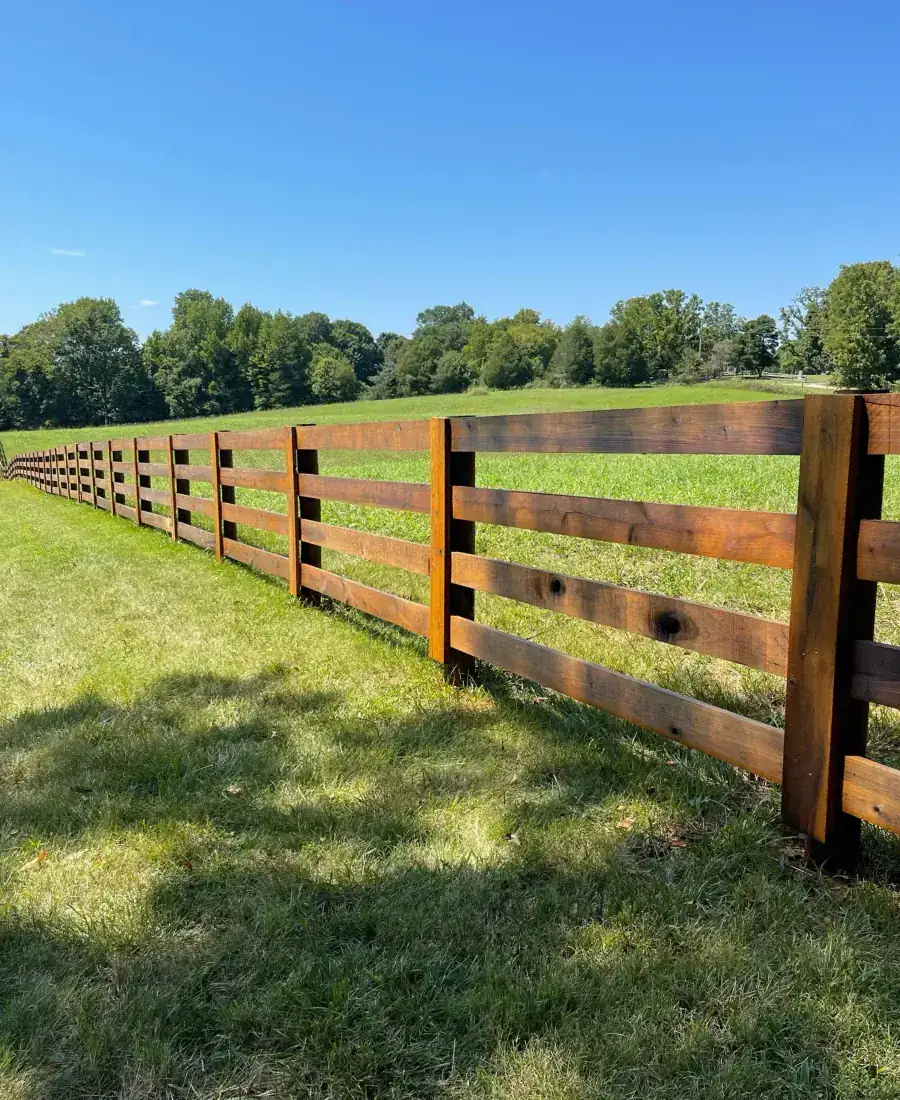
Plank, or board, fencing is the classic look on Kentucky horse farms, and there is a practical reason. Horses can see it clearly, and the smooth boards reduce the risk of injury compared with sharp or hard-to-see fencing. It also marks a boundary handsomely along a road or drive.
Woven wire for livestock
Woven wire gives dependable containment for livestock and flexes with uneven terrain, which matters on rolling pasture. Properly tensioned on well-set posts, it holds up to animals leaning and pushing day after day.
Posts, spacing and tension decide whether a farm fence holds. The material only matters if those are right.
What about barbed wire?
We generally avoid barbed wire because of insurance limitations, but we are glad to talk through smooth wire options where they make sense.
Plan the layout, not just the line
- Paddocks and rotation: where will animals move, and when?
- Gates: where tractors, trailers and people need to get through.
- Repairs: broken planks replaced, wire re-stretched and leaning posts reinforced before animals find the weak spot.